6 Mobile Steps to Prepare a Patio Garden for Container Veggies
Patio concrete radiates warmth. Stucco walls shield your leafy crops from wind shear. Within 48 square feet, you can harvest 30 pounds of tomatoes, 15 pounds of peppers, and continuous salad greens from May through October. Learning how to prepare a garden for a patio vegetable garden transforms bare hardscape into a modular production system where drainage, substrate chemistry, and vertical space converge. This method requires no tilling, no weed suppression, and no soil amendments beyond what fits inside each vessel.
Materials
Select containers with a minimum volume of 5 gallons for determinate tomatoes, 10 gallons for indeterminate varieties, and 3 gallons for peppers or eggplants. Fabric grow bags offer superior gas exchange and prevent circling roots. Rigid plastic pots require drainage holes drilled at 2-inch intervals around the perimeter, 1 inch above the base, to eliminate perched water tables.
Substrate must exhibit a cation exchange capacity (CEC) of 10 to 15 milliequivalents per 100 grams. Blend 40% peat moss or coir, 30% aged compost, 20% perlite, and 10% worm castings. Add dolomitic lime at 2 tablespoons per gallon to buffer pH to 6.2-6.8. Incorporate a granular organic fertilizer rated 4-4-4 or 5-5-5 at 1 tablespoon per gallon of mix. This baseline NPK provides slow-release nitrogen, phosphorus for root initiation, and potassium for cellular turgor.
For mycorrhizal colonization, inoculate each container with 1 teaspoon of Rhizophagus irregularis spores during the final substrate mixing. These fungi extend hyphal networks 10 inches beyond root tips, increasing phosphorus uptake by 30%.
Procure a soluble fertilizer with micronutrients: calcium, magnesium, boron, and molybdenum. Tomato blossom-end rot stems from calcium deficiency, not water stress. Use a 15-5-15 liquid feed at half strength, applied every 10 days after fruit set.
Timing
Hardiness Zones 7 through 10 permit transplanting after the final frost date, typically April 15 in Zone 7b and March 1 in Zone 9a. Nighttime soil temperatures must stabilize above 55°F for Solanaceae (tomatoes, peppers, eggplants). Below this threshold, root hair elongation stalls, and phosphorus uptake declines by 40%.
Zone 6 gardeners should delay transplanting until May 10. Employ Wall O'Water season extenders or install clear polycarbonate shields on the north side of containers to trap longwave radiation.
Autumn crops begin August 1 in Zones 7-8. Succession-plant arugula, chard, and kale every 14 days through September 15. Frost tolerance increases when leaf tissue accumulates soluble sugars; expect harvests until Thanksgiving in Zone 8a.
Phases
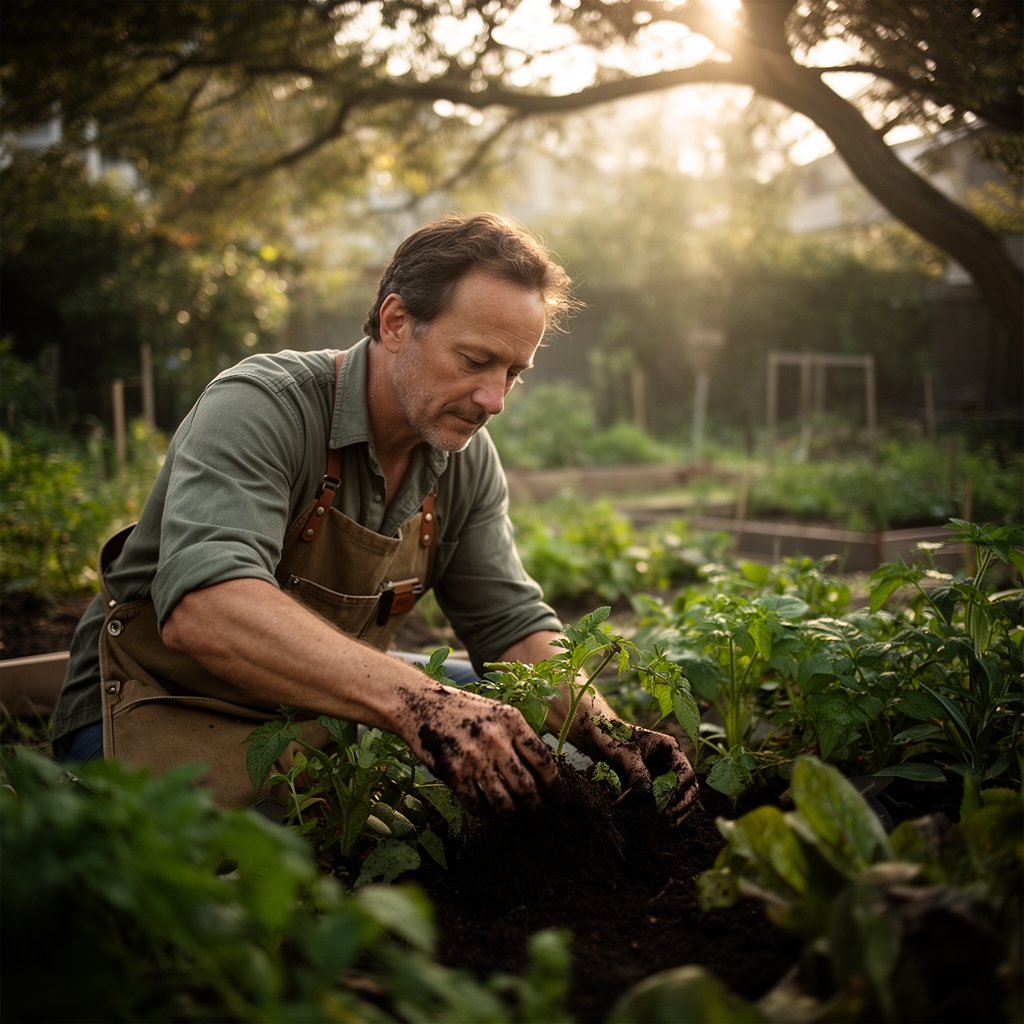
Sowing: Direct-seed bush beans, radishes, and leafy greens into pre-moistened substrate. Sow at twice the seed diameter depth. Beans require 1 inch, lettuce requires surface contact with light exposure for germination. Maintain substrate moisture at 60-70% field capacity using a tensiometer or the squeeze test: a handful should form a loose ball without releasing free water.
Pro-Tip: Pre-soak bean and pea seeds in a 0.5% humic acid solution for 12 hours to accelerate radicle emergence by 24 hours.
Transplanting: Harden off seedlings over 7 days by reducing irrigation frequency by 30% and increasing UV exposure 2 hours daily. At transplanting, bury tomato stems up to the first true leaves. Adventitious roots form along buried stem tissue within 5 days, increasing root biomass by 40%.
Space indeterminate tomatoes 18 inches apart. Plant peppers 14 inches apart. Install a 6-foot stake or trellis at planting to avoid root disturbance later. Bind stems with soft fabric strips at 30-degree angles to the vertical to promote auxin distribution and lateral branching.
Pro-Tip: Drench each transplant hole with 1 cup of dilute fish emulsion (1 tablespoon per gallon) to provide soluble nitrogen and colonize the rhizosphere with beneficial bacteria.
Establishing: During the first 14 days post-transplant, irrigate daily at sunrise to replace overnight transpiration losses. Apply 0.5 gallons per 5-gallon container. Root systems establish radial spread equal to canopy diameter by day 21. Reduce irrigation frequency to every 48 hours, increasing volume to 1 gallon per container as leaf area index rises.
Pinch terminal buds on basil when plants reach 6 inches to force branching. Remove lower leaves on tomatoes up to 12 inches from the substrate surface to improve airflow and reduce Septoria spore load.
Pro-Tip: Apply a 1-inch layer of shredded hardwood mulch to container surfaces to suppress fungus gnats and reduce evaporative loss by 25%.
Troubleshooting
Symptom: Interveinal chlorosis on new growth.
Solution: Iron deficiency induced by alkaline pH. Drench with chelated iron (Fe-EDDHA) at 1 teaspoon per gallon. Retest substrate pH and adjust with elemental sulfur at 1 tablespoon per 5 gallons to lower pH by 0.5 units.
Symptom: Wilting at midday despite moist substrate.
Solution: Root-knot nematode (Meloidogyne incognita) or southern blight (Sclerotium rolfsii). Unpot plant and inspect roots for galls or white mycelial mats. Discard infected substrate. Solarize replacement containers under clear plastic for 6 weeks at 140°F.
Symptom: Blossom drop on peppers.
Solution: Night temperatures above 75°F disrupt pollen tube elongation. Increase air circulation with a 6-inch clip fan. Mist flowers at dawn to enhance pollen viability.
Symptom: Cracked tomato fruits.
Solution: Irregular irrigation cycling between drought and saturation. Maintain substrate moisture at 70% field capacity. Install drip emitters on timers delivering 0.25 gallons per hour for 2 hours daily.
Symptom: Stippled yellow leaves with fine webbing.
Solution: Two-spotted spider mite (Tetranychus urticae). Spray leaf undersides with insecticidal soap (potassium salts of fatty acids) at 2% concentration every 5 days for 3 applications. Introduce Phytoseiulus persimilis predatory mites at 5 per plant.
Maintenance
Irrigate when the top 2 inches of substrate dry. Insert a finger or moisture probe to verify. Containers in full sun require 1 to 1.5 gallons daily during peak fruiting. Drip irrigation systems maintain consistent moisture without wetting foliage.
Feed every 10 days with soluble 15-5-15 fertilizer at 1 tablespoon per gallon. Increase nitrogen to 20-10-20 during vegetative growth if lower leaves yellow. Switch to 10-20-20 during flowering to enhance fruit set.
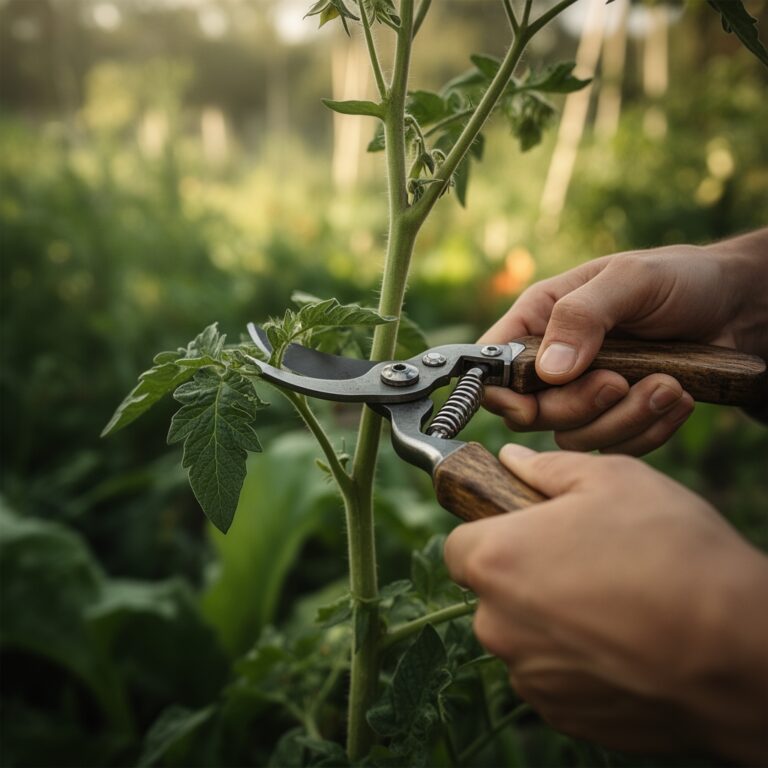
Prune indeterminate tomatoes to 2 main stems. Remove all suckers below the first flower truss. Redirect auxin to terminal meristems for vertical growth rather than lateral sprawl.
Scout for pests twice weekly. Check leaf undersides for eggs and early instars. Hand-remove hornworms, crushing egg masses of cabbage loopers.
Rotate containers 90 degrees weekly to equalize light exposure. South-facing patios deliver 8-10 hours of direct sun; east-facing patios provide 5-6 hours, suitable for leafy greens but inadequate for fruiting crops.
FAQ
Can I reuse last year's potting mix?
Refresh spent substrate by removing the top 4 inches and replacing it with fresh compost. Add 1 tablespoon of 4-4-4 fertilizer per gallon. Sterilize the remaining mix by baking at 180°F for 30 minutes if disease occurred.
What containers work best for root crops?
Carrots require 12-inch depth. Use cylindrical pots or fabric bags. Radishes tolerate 6-inch depth. Avoid shallow trays; taproots fork when obstructed.
How do I prevent containers from tipping in wind?
Fill the bottom 2 inches with gravel or place bricks on the container base. Secure tall plants to walls or railings with garden ties.
Do patio containers need fertilizer if I use compost?
Yes. Compost supplies 1-1-1 NPK. Fruiting vegetables require 3-5% nitrogen by dry weight. Supplement with soluble or granular feeds to meet demand.
Can I grow tomatoes in partial shade?
Tomatoes require 6 hours of direct sun minimum for adequate photosynthesis. Yields drop 50% under 4 hours. Choose leafy greens or herbs for shaded patios.