8 Privacy Steps to Install a Private Edible Garden Screen
Growing a living wall that feeds you while blocking sightlines requires precision in species selection and structural support. Steps for installing a vegetable garden screen begin with understanding that vertical edible barriers must balance biomass density, fruiting potential, and light interception. A properly designed screen transforms a 6-foot corridor into a microclimate that produces 40-60 pounds of vegetables per season while creating visual separation from neighbors or streets.
Materials
Foundation amendments set the stage for root establishment. Apply a 3-inch layer of composted pine bark (pH 5.5-6.2) mixed with a 4-4-4 organic meal blend at 2 pounds per 10 square feet. The balanced NPK ratio supports both vegetative scaffolding and fruit set without excessive nitrogen that would delay flowering.
Install a trellis framework of galvanized steel T-posts spaced 8 feet apart, connected by horizontal runs of 6-inch-mesh livestock fencing. This gauge supports vigorous climbers like pole beans (Phaseolus vulgaris) and Malabar spinach (Basella alba) without sagging under wind load or fruit weight. For heavier crops such as winter squash, add intermediate posts at 4-foot intervals.
Soil testing reveals cation exchange capacity. Sandy loams below 10 meq/100g require zeolite amendment at 5 pounds per 100 square feet to buffer nutrient leaching. Clay soils benefit from gypsum at 8 pounds per 100 square feet to improve calcium availability and flocculation.
Purchase transplants in 4-inch pots or direct-seed depending on frost dates. For annual screens, acquire snap peas (Pisum sativum var. macrocarpon), yard-long beans (Vigna unguiculata subsp. sesquipedalis), Armenian cucumber (Cucumis melo var. flexuosus), and cherry tomatoes (Solanum lycopersicum) in indeterminate varieties.
Timing
Zone 7 gardeners should install screens after the last spring frost, typically April 15-25. Soil temperatures must reach 55°F at 4-inch depth for cucurbit germination and 60°F for optimal bean emergence.
In Zones 8-9, a late-winter installation on February 20-March 10 captures an additional 6-8 weeks of cool-season production with sugar snap peas and fava beans (Vicia faba). These tolerate light frost and establish before heat stress.
Zones 5-6 require waiting until May 10-20, when nighttime lows stabilize above 50°F. Cold-sensitive species like Malabar spinach abort flowers below 55°F, delaying screen density by three weeks.
Phases
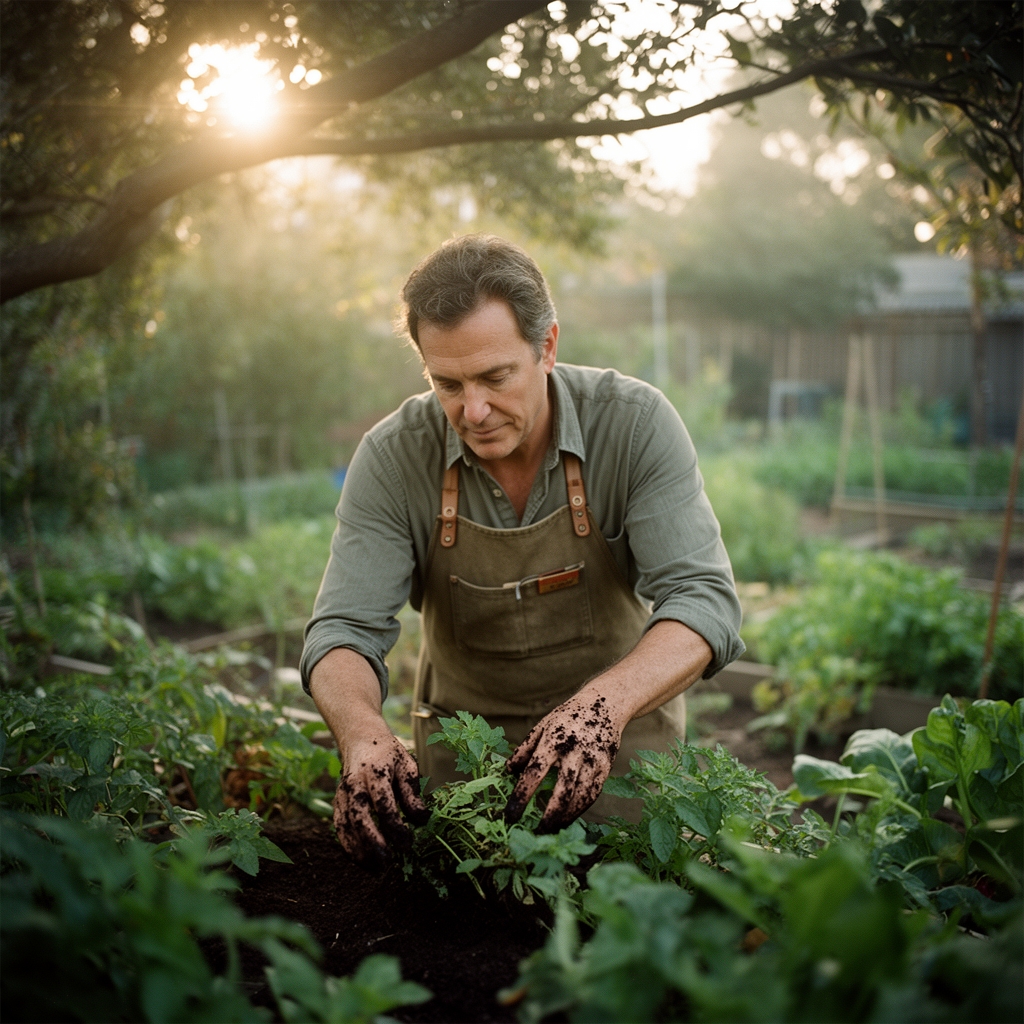
Sowing: Direct-seed legumes 1 inch deep in a staggered double row 6 inches from the trellis base. Space seeds 3 inches apart for pole beans, 2 inches for peas. Inoculate seed with Rhizobium bacteria at a rate of 1 teaspoon per 50 seeds to enhance nitrogen fixation. Germination occurs in 7-10 days at 65°F soil temperature.
Pro-Tip: Pre-soak bean seeds in a 1:1000 solution of kelp extract for 8 hours to accelerate radicle emergence and improve stand uniformity by 30%.
Transplanting: Set out tomato and cucumber starts when they display 4-6 true leaves. Dig holes 12 inches deep, amending each with 1/4 cup bone meal (0-10-0) for phosphorus-driven root expansion. Plant tomatoes at a 45-degree angle, burying two-thirds of the stem to encourage adventitious rooting along the internode. Space transplants 24 inches apart in a single line.
Pro-Tip: Apply mycorrhizal fungi granules directly to root balls at 1 tablespoon per plant. The Glomus species colonize within 14 days, extending effective root surface area by 100-1000 times and improving drought tolerance.
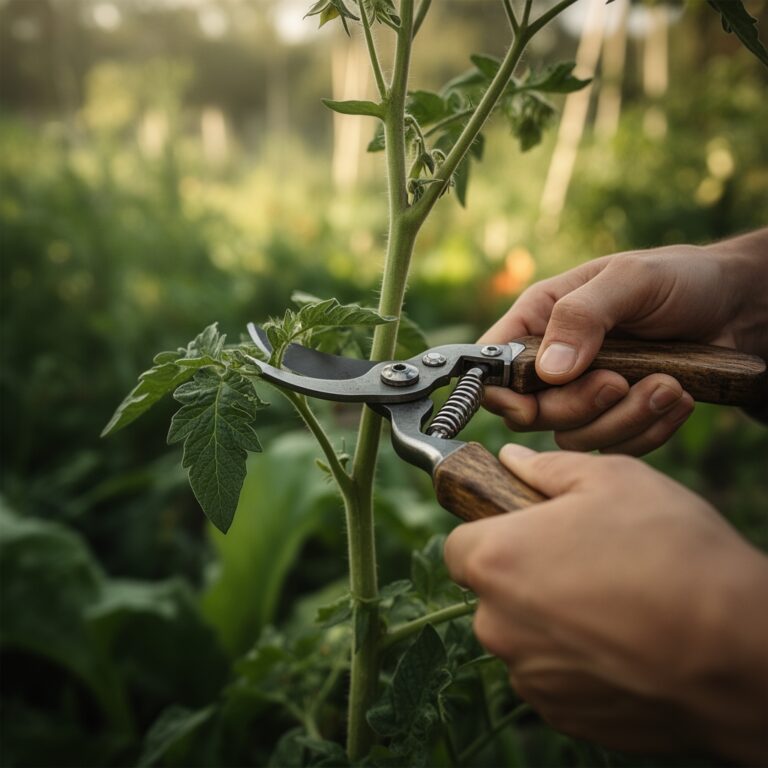
Establishing: Train main stems to vertical wires or mesh within the first week post-transplant. Cucurbits require manual direction of tendrils every 3-4 days as auxin distribution favors horizontal growth. Prune tomato suckers below the first flower truss to redirect energy into vertical scaffolding. Remove all growth within 12 inches of the soil line to improve air circulation and reduce fungal pressure.
Pro-Tip: Foliar-feed every 14 days with fish emulsion at 1 tablespoon per gallon. Apply in early morning to open stomata, targeting undersides of leaves where nutrient uptake occurs at twice the rate of upper surfaces.
Troubleshooting
Symptom: Yellowing lower leaves with green veins (interveinal chlorosis).
Solution: Iron deficiency caused by high soil pH. Drench root zone with chelated iron (Fe-EDDHA) at 1 ounce per gallon. Lower pH to 6.0-6.5 with elemental sulfur at 1 pound per 100 square feet.
Symptom: Blossom end rot on tomatoes and cucumbers.
Solution: Calcium transport failure due to inconsistent watering. Maintain soil moisture at 60-70% field capacity. Side-dress with gypsum at 1/4 cup per plant and mulch with 3 inches of straw to buffer moisture fluctuations.
Symptom: Stippled leaves with fine webbing.
Solution: Two-spotted spider mites (Tetranychus urticae). Spray insecticidal soap at 5 tablespoons per gallon, coating leaf undersides. Release predatory mites (Phytoseiulus persimilis) at 50 per plant for biological control.
Symptom: Stunted growth with purple leaf margins.
Solution: Phosphorus deficiency exacerbated by cold soil. Apply a 5-10-5 starter fertilizer at 1 tablespoon per plant and cover soil with black plastic to raise temperature 8-10°F.
Maintenance
Irrigate with 1 inch of water per week, delivered in two 0.5-inch sessions. Deep watering encourages roots to penetrate beyond the 6-inch zone, accessing subsoil moisture reserves during heat events. Drip lines positioned 4 inches from plant bases reduce foliar disease by 60% compared to overhead sprinklers.
Prune indeterminate tomatoes to 2-3 main leaders, removing suckers weekly. This concentrates fruit production and maintains screen porosity for airflow. Harvest beans every 2-3 days to prevent overmature pods from halting auxin-driven flower initiation.
Top-dress every 4 weeks with compost at 1/4 inch depth. The slow-release nitrogen supports continuous vegetative growth without the salt accumulation seen with synthetic fertilizers.
FAQ
How tall should the trellis be?
Eight feet allows for 6.5 feet of productive screen height while remaining reachable for harvest without ladders.
Which crops provide the fastest privacy?
Scarlet runner beans reach 6 feet in 45 days. Malabar spinach achieves 8 feet in 60 days in warm climates.
Can I grow a screen in partial shade?
Leafy crops like Malabar spinach tolerate 4-5 hours of sun. Fruiting plants require 6-8 hours for adequate carbohydrate production.
When do I replant for continuous coverage?
Succession-plant beans every 3 weeks through midsummer. Replace spring peas with cucumbers in June.
What spacing prevents disease?
Maintain 24-inch centers for large plants and ensure the screen runs north-south to maximize light penetration and reduce humidity.