7 Custom Steps to Build Wooden Stairs for Sloped Plots
The southern face of a sloped plot warms three hours earlier than flat ground, extending the growing season by fourteen days in USDA Zone 5. Terracing with wooden stairs transforms erosion into microclimates while providing access corridors for wheelbarrows loaded with compost and harvest crates. Steps for building vegetable garden steps require precise angle calculations, pressure-treated lumber rated for ground contact, and an understanding of how soil compaction affects root development on disturbed slopes.
Materials for Garden Stair Construction
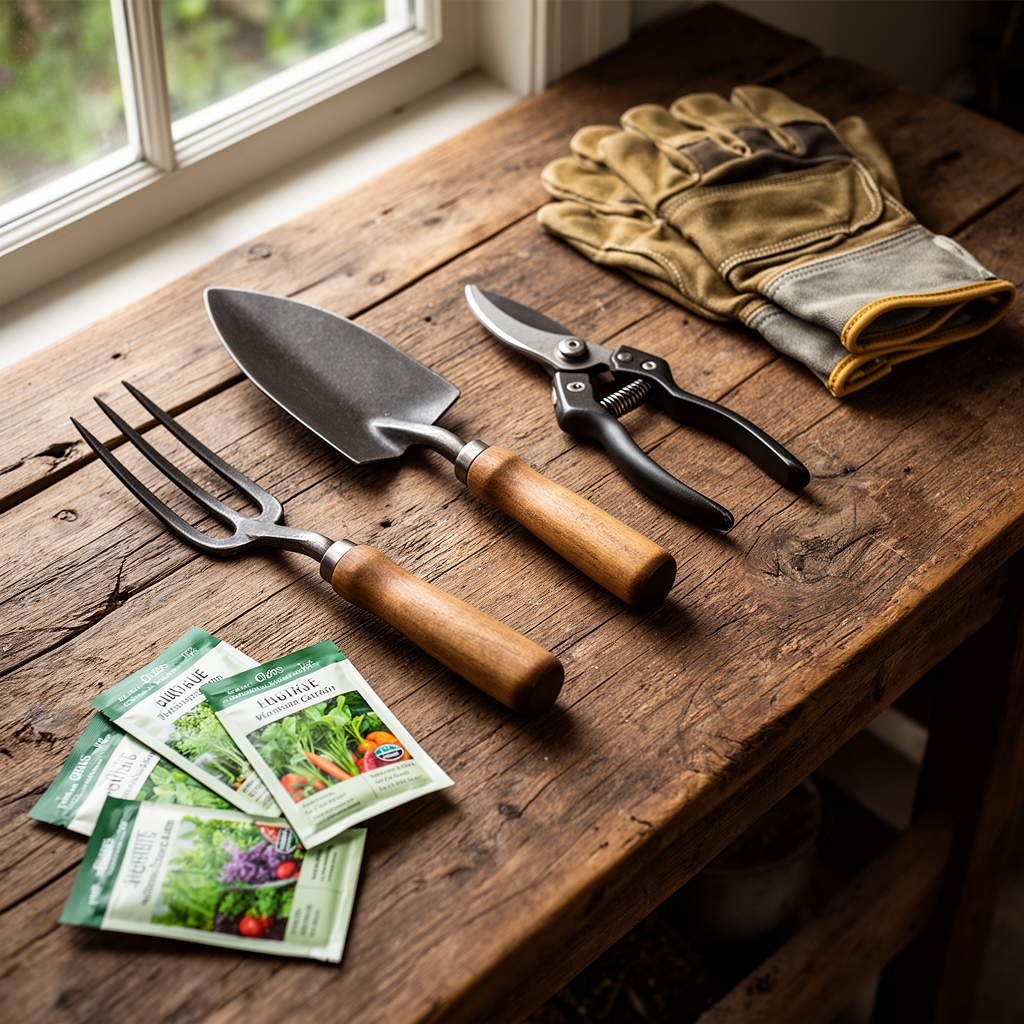
Select pressure-treated southern yellow pine or black locust heartwood for stringers and treads. Chemical treatment penetration reaches 0.6 inches in PT lumber, protecting against basidiomycete decay fungi prevalent in soil contact zones. Black locust offers natural rot resistance through robinetin compounds without chemical preservatives.
Hardware demands hot-dipped galvanized lag screws, 3/8 inch diameter, with minimum 4-inch penetration into stringers. Standard zinc-plated fasteners corrode within eighteen months under soil splash conditions. Landscape fabric with 3-ounce weight per square yard controls weed pressure beneath treads while maintaining gas exchange for aerobic decomposition.
Backfill material should consist of crushed stone aggregate, 3/4-inch minus grade, compacted in 3-inch lifts to achieve 95% modified Proctor density. This specification prevents frost heaving that displaces stair structures by up to 2 inches annually in freeze-thaw climates. Add dolomitic limestone at 5 pounds per cubic yard if native soil pH measures below 6.2, raising cation exchange capacity for terrace plantings.
Amend terrace beds with compost achieving 4-4-4 NPK equivalent through blended fish meal, kelp, and aged manure. Target carbon-to-nitrogen ratio of 25:1 for immediate planting versus 35:1 for fall preparation requiring spring mineralization. Incorporate mycorrhizal inoculant at 2 ounces per 10 square feet during initial bed establishment.
Timing by Hardiness Zone
Begin construction six weeks before last spring frost in Zones 3-5, four weeks in Zones 6-7, and during winter dormancy in Zones 8-10. Soil must drain freely to 6-inch depth within four hours of saturation, a condition rarely met before soil temperatures stabilize above 45°F at 4-inch depth.
Complete structural work before spring ephemerals break dormancy. Disturbed slopes lose 40% more topsoil to erosion during active root growth periods. In regions experiencing summer monsoons, finish grading and install stairs before June 15 to allow vegetation establishment before peak precipitation.
Fall construction permits wood weathering that opens grain structure for better preservative performance. Delay planting terrace beds until spring, using winter months for three freeze-thaw cycles that improve aggregate interlock in compacted base material.
Construction Phases

Excavation and Grade Establishment
Measure slope angle using a 4-foot level and protractor, calculating rise-over-run ratio. Ideal tread depth measures 14 inches with 6-inch rise per step, maintaining a 7:11 ratio that accommodates loaded wheelbarrows. Mark stringer locations with mason's line pulled taut at calculated grade.
Excavate to undisturbed subsoil, removing organic mat and A-horizon to eliminate differential settling. Compact native B-horizon with plate tamper achieving three passes minimum. Subgrade must support 3,000 pounds per square foot without deflection exceeding 1/4 inch.
Pro-Tip: Install French drain along uphill side of lowest step using 4-inch perforated pipe in 12-inch gravel envelope. Slope pipe at 2% grade to daylight outlet, preventing hydrostatic pressure buildup that causes stair displacement.
Framing and Structural Assembly
Cut stringers from 2×12 lumber, maintaining 3.5 inches minimum throat depth after tread notches. Secure base to concrete footings set 18 inches below frost line, anchored with epoxy-set bolts rated for 1,500 pounds tension. Upper attachment requires through-bolting to 6×6 header posts set in 18-inch diameter piers.
Install treads using two 3/8-inch lag screws per stringer contact point. Predrill holes 1/64 inch undersize to prevent splitting while ensuring bite-thread engagement. Leave 1/4-inch gaps between tread boards for drainage and thermal expansion.
Pro-Tip: Apply auxiliary support blocking between stringers at mid-span on stairs exceeding 48 inches width. Blocking prevents lateral racking under eccentric loads and provides nailing surface for future handrail posts.
Terrace Bed Preparation
Backfill behind each riser with stone aggregate in progressive lifts, compacting to refusal with hand tamper. Install landscape fabric against riser back face, extending 6 inches onto compacted stone. This detail prevents fine soil migration into drainage voids.
Spread 4 inches of screened topsoil amended to 5% organic matter by volume. Incorporate rock phosphate at 10 pounds per 100 square feet if Bray-1 phosphorus tests below 25 ppm. Till to 8-inch depth, breaking clods to pea-sized aggregates that promote capillary water movement and auxin distribution in developing root systems.
Pro-Tip: Create shallow swales along terrace rear margins to capture runoff from upper slope, directing water into bed centers rather than over step edges where erosion concentrates.
Troubleshooting Common Issues
Symptom: Tread boards cupping upward at edges within one season.
Solution: Grain orientation error. Install boards bark-side up so growth rings cup downward as wood loses moisture. Replace affected treads during dry summer months.
Symptom: Stringers separating from riser boards despite proper fastening.
Solution: Inadequate backfill compaction allows voids to collapse under traffic. Excavate behind failed section, compact stone in 2-inch lifts to 95% density, reinstall with additional blocking.
Symptom: Lateral movement exceeding 1 inch at mid-span stringer.
Solution: Frost heaving from inadequate footing depth. Install helical piers to 36-inch depth or below frost line, bracket to existing stringers with structural steel plates.
Symptom: Vegetation dying in terrace beds adjacent to pressure-treated risers.
Solution: Copper naphthenate leachate toxicity. Install HDPE liner between PT lumber and soil, or substitute untreated cedar heartwood for riser boards in planting zones.
Maintenance Requirements
Apply penetrating oil finish annually to treads, choosing formulations without plant-toxic biocides. Linseed or tung oil maintains 18-month service life under moderate traffic without affecting adjacent soil chemistry.
Remove organic debris from tread surfaces weekly during leaf-fall. Decomposing material retains moisture against wood grain, accelerating decay through lignin-degrading enzyme activity.
Inspect lag screws biannually for withdrawal. Tighten connections showing more than 1/8-inch gap between washer and wood surface. Replace fasteners exhibiting rust bleeding through galvanized coating.
Top-dress terrace beds with 1/2 inch compost each spring, maintaining organic matter content against mineralization losses of 3-5% annually. Apply balanced organic fertilizer at 2 pounds nitrogen per 1,000 square feet in split applications: half at planting, half at mid-season.
Provide 1 inch of water weekly during active growth if precipitation falls short. Drip irrigation along terrace back edges delivers moisture to root zones without saturating stair structures or promoting wood decay.
Frequently Asked Questions
What lumber thickness prevents sagging on 4-foot-wide stairs?
Two-by-twelve stringers spaced 16 inches on center support residential loads without blocking. Increase to 2×14 or add mid-span support for 5-foot widths.
How many stairs fit a 30-degree slope over 12 feet?
Seven steps with 6.5-inch rise and 14-inch run. Adjust final riser height to meet existing grade rather than forcing uniform dimensions.
Can recycled railroad ties replace pressure-treated lumber?
Creosote toxicity persists for decades, inhibiting vegetable growth within 18 inches of contact. Choose untreated hardwood or modern PT alternatives.
Should stringers attach directly to landscape timbers forming terrace walls?
No. Timbers shift independently under soil pressure. Anchor stairs to dedicated concrete footings or helical piers for structural isolation.
What prevents soil from washing between tread gaps?
Landscape fabric behind risers blocks migration while maintaining drainage. Annual mulch application on terrace surfaces reduces erosion velocity during heavy precipitation.